Tuesday, March 11, 2014

The Big Short

Synopsis
A few savvy investors realized that they could potentially make a lot of money by shorting subprime mortgages.

My thoughts
I don't have a background in finance, but Michael Lewis makes a very complicated topic easy and entertaining for laymen to follow. I read this as a follow-up to Lewis's Boomerang, and both have whetted my interest in other books on the financial meltdown. I'm a bit late on this—after all, the market crashed in fall 2008. But the fact that it was so long ago gives me some added perspective. I know what happens next, even if my memories of the collapse of Lehman Brothers and the ensuing chaos are a little hazy. The real treat of this book is getting into the meat of what happened before all hell broke loose.

Lewis has become one of my favorite non-fiction writers, and it's because of the way he can take boring, complicated topics and make them relatable and funny. He does this by writing about the eccentric men who independently clued into the impending crisis. He gives you someone to root for—if not an everyman, then an underdog. It's not a blow-by-blow account from the financial institutions' point of view, but it's interesting to read about the people who accurately predicted the crisis, especially since some of them were denounced as crazy or were not taken seriously before it happened.

Looking back, it's easy to wonder who thought the doomed financial model was a good idea, but Lewis reminds us that it was so large and complex that it was hard to see the whole big picture. It's also scary that—apparently—no one broke any laws. Since 2008, there has been some legislative action (in the form of Dodd-Frank), but there hasn't been much else—or much demand for it. So there are some new safeguards in place, but they are limited and they still leave Wall Street to police itself and show restraint.

One note not about the book itself: I read this on my brand new Kindle and liked it quite a bit. I was annoyed that I was constantly turning pages, but I did like how light it felt in my hands (and in my purse). I used the Kindle Owners' Lending Library to borrow the book and I'd definitely do that again.

Bottom line
A compulsively readable account of the spectacular failure of the financial system.

Fine print
The Big Short, by Michael Lewis
Genre: non-fiction, current events, finance
Photo from Goodreads
I borrowed this book from the Kindle Owners' Lending Library.

Friday, February 7, 2014

Boomerang

Synopsis
The versatile author of Moneyball, The Blind Side, and The Big Short travels to Germany, Greece, Iceland, and Ireland to explore the origins of the recent financial crisis - and then he brings it back home to the United States.

My thoughts
This is a whole new genre of travel writing. Each chapter is dedicated to a different country and its dysfunctional economic system (they started as individual articles for Vanity Fair). Michael Lewis first travels to Iceland, where clueless Icelandic fishermen-turned-bankers ran their national economy into the ground. In a chapter titled "And They Invented Math!" he turns his attention to Greece and recounts how a projected budget deficit of 7 billion euros had to be revised upward to 30 billion because "until that moment, no one had bothered to count it all up." (There is also the bizarre story of a group of monks who managed to get the Greek government to give them land, which they turned into a real estate empire whose worth can be measured in the low billions.) Lewis's next stop is Ireland, whose Celtic Tiger had been transformed into a Celtic Garfield and whose citizens seem oddly complacent about their country's financial collapse. And then there's Germany, which finds itself suddenly responsible for the rest of the Eurozone's financial mistakes.

Lewis highlights every absurdity with a gleeful how-could-they-not-see-this-coming tone. But the brilliance is evident in the last chapter, when Lewis turns the same voice on the United States. Lewis travels to California, where he goes on a memorable bike ride with former governor Arnold Schwarzenegger and talks to a fire chief about the tough decisions he's made regarding pensions. The bike ride is fun to read about, but Lewis makes sure the impact of the financial crisis hits home when he takes the conversation to a municipal level.

Lewis paints a truly horrifying picture of an unethical, under-regulated financial system driven by the bottomless greed of American bankers. Bankers were rewarded with large salaries and even larger bonuses, leaving them absolutely no incentive to think beyond short-term gains. This ruined the financial markets - and everywhere else in the world, it was seen as a completely unconscionable way to conduct business. At one point, Lewis interviews a lifelong German public servant and asks him whether he ever thought of going into private practice and making a fortune. "But I could never do this," is the shocked reply. "It would be illoyal!" This neatly sums up the difference between America and the rest of the world, and it explains how so-called financial experts were mislead into making disastrous decisions - they were playing by a different set of rules that the Americans disregarded.

The Big Short, Lewis's in-depth study of the causes of the U.S. crash, has catapulted to the top of my reading list.

Bottom line
A quick, hilarious, and terrifying read.

Fine print
Boomerang: Travels in the New Third World, by Michael Lewis
Genre: nonfiction, finance, travel
Photo from Goodreads
I borrowed this book from my library.

Tuesday, December 3, 2013

Where Are the Children?

Synopsis
Seven years ago, Nancy's two children disappeared. They were found murdered and Nancy was convicted in their deaths. Freed on a technicality, she has relocated to Cape Cod, where she has rebuilt her life. Now her two children from her second marriage have gone missing.

My thoughts
When I was in middle school, one of my friends recommended Mary Higgins Clark's mysteries. For a couple years, I devoured everything of hers that I could get my hands on. Her heroines were smart, successful, resourceful, and chic - and they always got the guy in the end. My enthusiasm waned sometime in high school, and when I picked up one of her books after college I didn't even bother finishing it because it was so formulaic and predictable.

Where Are the Children? was Clark's first bestseller and I remembered liking it, so I picked it up at the library. It's one of those books that you can fly through in a few hours. It was enjoyable to read and it reminded me what I like best about Clark's writing. She pays a lot of attention to detail and the inner monologues of her characters.

The story is chilling. Two children go missing and that's bad enough, but you have the added twist of a mother who's been convicted of murdering her children from her first marriage. As a reader there's never any doubt that Nancy is innocent of both crimes, but it's understandable that the investigation immediately focuses on her.

You have to suspend disbelief for a lot of mysteries, but this one in particular stretches credulity. There are an awful lot of big coincidences that allow all the threads of the novel to come together at exactly the right moment. There are also some enormously cheesy lines ("Now, listen, bum, and listen good.") But the ending is very satisfying.

Bottom line
Read some of Clark's other books before this one. Try Weep No More, My Lady; Remember Me; or Loves Music, Loves to Dance.

Fine print
Where Are the Children?, by Mary Higgins Clark
Genre: mystery
Photo from Goodreads
I borrowed this book from the library.

Saturday, November 23, 2013

Embassytown

Synopsis
Oh God. So there's this remote outpost at the edge of the universe. Humans have colonized it and get along with the indigenous Hosts. Until a new Ambassador shows up and ruins everything. Okay, so that's the basic premise. It sounds like your run-of-the-mill science fiction story, but it's more complex. The book makes you think hard about language, religion, colonialism, and human nature.

My thoughts
I wasn't smart enough for this book. So that kind of put a damper on my enjoyment of it, but it was exciting and I did like it.

The most intriguing aspect of the book was its ruminations on language. The Hosts are pure creatures who cannot lie, and Language is everything to them (hence the capital L). Unless there's a word for something, the Hosts cannot conceptualize it. To get around this, they need similes to express the concept that one thing can be like another. The catch is that there are highly structured rules concerning similes. Similes must be based on something that has actually occurred, so the Hosts stage events so that a new simile (and therefore new ideas) can enter their language. Humans are a corrupting influence on the Hosts. The Hosts invite them to festivals where the humans tell lies and the Hosts try to emulate them.

The tragic twist is that the humans bring an illness that decimates the Hosts, and there are only two ways to stop it. The Hosts must murder all of the humans (obviously untenable for our human heroine) or they must learn to lie, ruining their relationship with Language. It's powerful.

Bottom line
Probably not worth it unless you're a hardcore science fiction aficionado. I'll try some of China Mieville's other novels, though.

Fine print
Embassytown, by China Mieville
Genre: science fiction
Photo from Goodreads
I borrowed this book from the library.

Wednesday, October 30, 2013

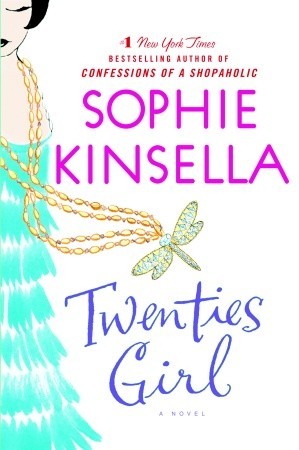
Twenties Girl

Synopsis
A twentysomething with a broken career and an even brokener love life is haunted by her dead great-aunt.

My thoughts
This was a really fun read. This is my third Sophie Kinsella book (after The Undomestic Goddess and Remember Me - I haven't read any of the Shopaholic series) and my favorite so far. I loved this story in particular because it's a buddy comedy and a romantic comedy in one. The wacky heroines in this story are Lara Lington and the ghost of her great-aunt Sadie, who's stuck in the 1920s and upset over the loss of her necklace. Sadie can't move on to the afterlife until she's found the necklace, and since Lara is the only one who can see her it becomes her mission to find it. And Lara's got enough to deal with without a tracking down some random relative's random bauble - her boyfriend has broken up with her and her business partner has deserted her and their fledgling enterprise. Things get even more interesting when Sadie falls in love with a business exec and insists that Lara woo him since she can't do it herself. There's a lot going on and it takes a while to set everything in motion, but once the story gets going the action and laughs don't stop.

Kinsella's manner of storytelling is infectiously, buoyantly bubbly. Her characters are always optimistic (sometimes borderline delusional) and I feel better after I hang out with them for a little while. She's also hilarious. The situations her characters get themselves into and their reactions to them are often laugh-out-loud funny.

I was a little skeptical of the paranormal element of the story. I wasn't sure a story with a ghost would be all that good, but I couldn't have been more wrong. Throwing a ghost into the story was (somewhat ironically) an inventive way of injecting some life into what can be a stale genre.

The one serious message from this book: call your lonely elderly great-aunt. Lara and Sadie's relationship is lovely, but it's also a bit sad because they're not contemporaries and Sadie eventually has to move on.

Bottom line
Grab this book, curl up with a nice bottle of wine, and enjoy!

Fine print
Twenties Girl, by Sophie Kinsella
Genre: fiction, chick lit
Photo from Goodreads
I own this book.

Monday, October 28, 2013

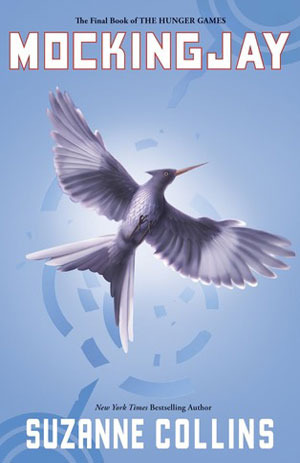
Mockingjay

Synopsis
In the final book of the Hunger Games trilogy, Katniss becomes a mascot for the resistance and takes her fight all the way to the Capitol.

My thoughts
I liked it, and I admire what Suzanne Collins tried to accomplish, but I wasn't satisfied with it.

First, the good. Collins continues with the action sequences that made the first two books such page turners. I tore through Mockingjay just as quickly as I did the first two.

More importantly, Collins hones her moral message. In too many books, good and evil are clearly delineated. The good guys can do no wrong and the villains are thoroughly, unquestionably corrupt. But things aren't so simple in Mockingjay. Katniss becomes part of the larger rebellion, but has she merely traded one oppressive regime for another? Before Katniss has time to come to grips with this, she's forced to grapple with something much more serious - the question of whether the rebels could commit unthinkable atrocities to win the war. Collins is intentionally ambiguous on this point. It's horrifying to think about, especially when you consider it in the context of actual modern wars (particularly the civil war in Syria).

And now the major reason I wasn't completely satisfied with the book: the abrupt ending. Collins delivers a shocking plot twist in the book's last pages, an event which would have had major repercussions for Katniss. Instead, everything is resolved quickly and neatly and then the trilogy just ends.

Bottom line
A strong YA series.

Fine print
Mockingjay, by Suzanne Collins
Genre: YA fiction, dystopian fiction
Photo from Goodreads
I own this book.

Sunday, October 27, 2013

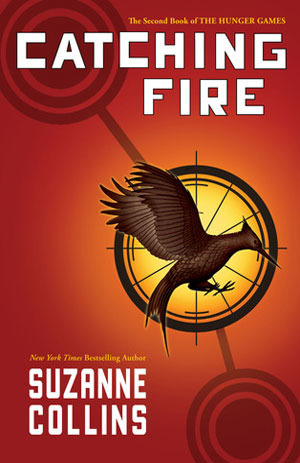
Catching Fire

Synopsis
Katniss won the Hunger Games, but now the Capitol is out to get her.

My thoughts
I just realized I never posted a review of Catching Fire even though I read it almost a year ago. I flew threw The Hunger Games on vacation and snatched Catching Fire off my bookshelf as soon as I walked in the door. And I flew through Catching Fire, too. It was a page-turner, although it was considerably weaker than Hunger Games (but not weak enough to dissuade me from picking up the final book in the series).

My main problem with the book is that it makes Katniss too important. Even if Katniss won the Hunger Games and embarrassed those in charge, it's too flimsy to support or even spark a revolution.

The love triangle gets fleshed out a little better, but the damage is already done. There's no conceivable way Katniss can end up with Gale even though he's a decent guy and he's probably a better match for Katniss than Peeta is. And speaking of Peeta ... he becomes too perfect and one-dimensional.

Finally, I think I might have actually groaned aloud when Katniss finds out she has to compete in the Hunger Games: All-Star Season. I wanted something new, not a rehash of the first book. But ... I was wrong. Suzanne Collins is really good at writing about the Hunger Games. The action is always riveting and unpredictable, and she pulls out all the stops to come up with new horrors for the characters. And that's why I ended up enjoying the book.

Bottom line
Not as good as the first book but good enough - and fast enough - to read.

Fine print
Catching Fire, by Suzanne Collins
Genre: YA fiction, dystopian fiction
Photo from Goodreads
I own this book.